Credynova || Credible Solutions, Sustainable Impact!

How Tiny Ocean Plankton Help Cool the Planet, Seed Clouds, and Could Even Bring Rain to Deserts
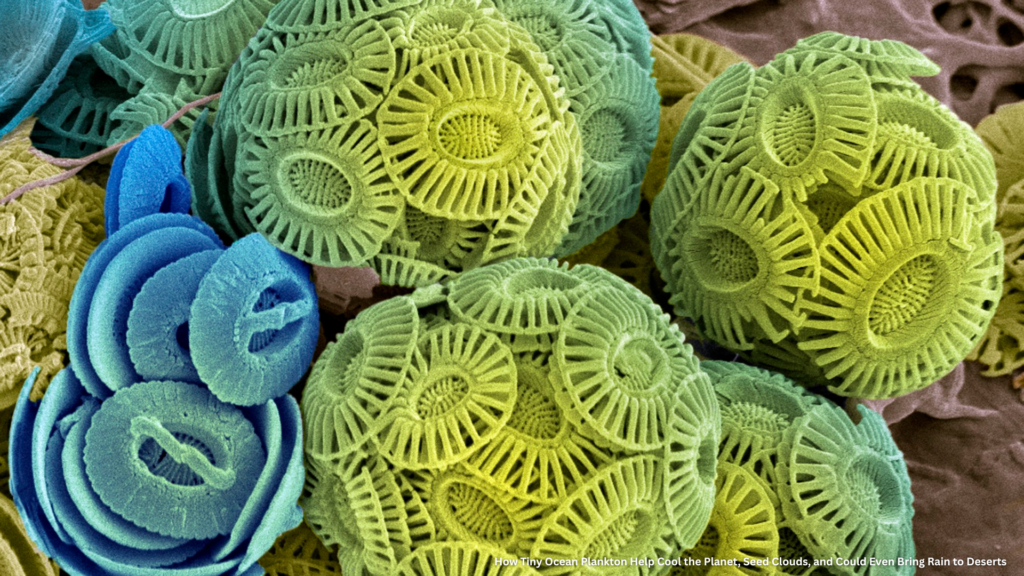
While often overlooked, phytoplankton — the microscopic, photosynthetic organisms floating in our oceans — have a profound impact on Earth’s climate. These tiny marine organisms not only form the base of the oceanic food web and absorb vast quantities of carbon dioxide (CO₂), but also participate in an elegant, natural mechanism that helps cool the planet, increase cloud formation, and potentially influence rainfall patterns, even across adjacent desert regions. Recent research highlights how phytoplankton-derived sulfur compounds contribute to cloud condensation nuclei (CCN), brightening clouds and reflecting sunlight. In this article, we explore the powerful role of phytoplankton in regulating climate and hydrological cycles, their biochemical pathways, the science behind marine cloud formation, and how these processes could support global climate resilience and land restoration.

Microscopic Powerhouses Behind the Planet’s Climate While often overlooked, phytoplankton — the microscopic, photosynthetic organisms floating in our oceans — have a profound impact on Earth’s climate. These tiny marine organisms not only form the base of the oceanic food web and absorb vast quantities of carbon dioxide (CO₂), but also participate in an elegant, […]

Phytoplankton as Natural Climate Regulators
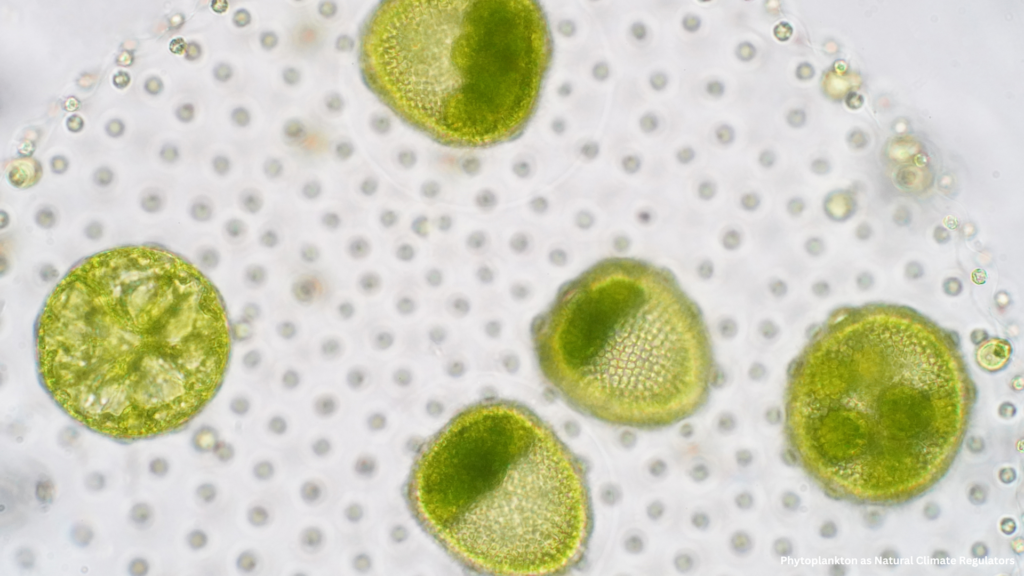
Phytoplankton, the microscopic photosynthetic organisms drifting in the upper sunlit layers of oceans and freshwater, are the foundational producers of the marine food web. However, beyond their ecological significance, they play a pivotal and often underappreciated role in regulating Earth's climate. Through complex biochemical processes, phytoplankton are instrumental in carbon sequestration, cloud formation, and even regional weather modulation. This article explores the mechanisms by which phytoplankton influence climate systems and their potential as agents of climate restoration.

Phytoplankton, the microscopic photosynthetic organisms drifting in the upper sunlit layers of oceans and freshwater, are the foundational producers of the marine food web. However, beyond their ecological significance, they play a pivotal and often underappreciated role in regulating Earth’s climate. Through complex biochemical processes, phytoplankton are instrumental in carbon sequestration, cloud formation, and even […]

Overcoming Misconceptions: The Real Science Behind Ocean Fertilization
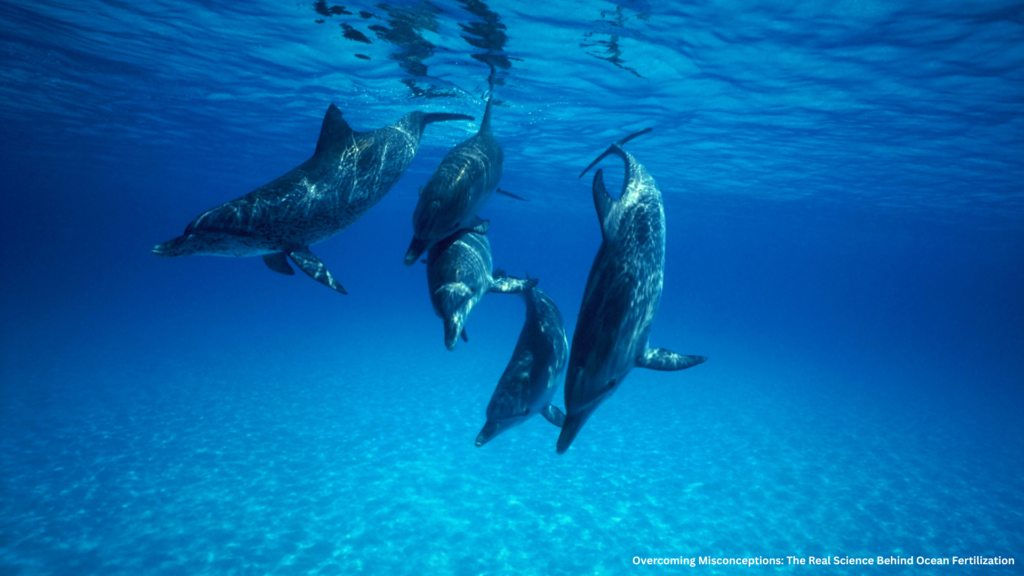
Overcoming Misconceptions: The Real Science Behind Ocean Fertilization For decades, Ocean Iron Fertilization (OIF) has been both celebrated and feared — viewed by some as a groundbreaking way to capture carbon and restore marine life, and by others as a potential ecological gamble. But what if many of these fears were based on misunderstandings rather than evidence? Today, after years of global research, data paints a very different picture: responsible ocean fertilization is not pollution — it’s restoration. Let’s clear the air and separate the myths from the science.

For decades, Ocean Iron Fertilization (OIF) has been both celebrated and feared — viewed by some as a groundbreaking way to capture carbon and restore marine life, and by others as a potential ecological gamble. But what if many of these fears were based on misunderstandings rather than evidence?Today, after years of global research, data […]

Sea to Soil: How Ocean Fertilization Revives Water Bodies and Rebuilds Fertile Land
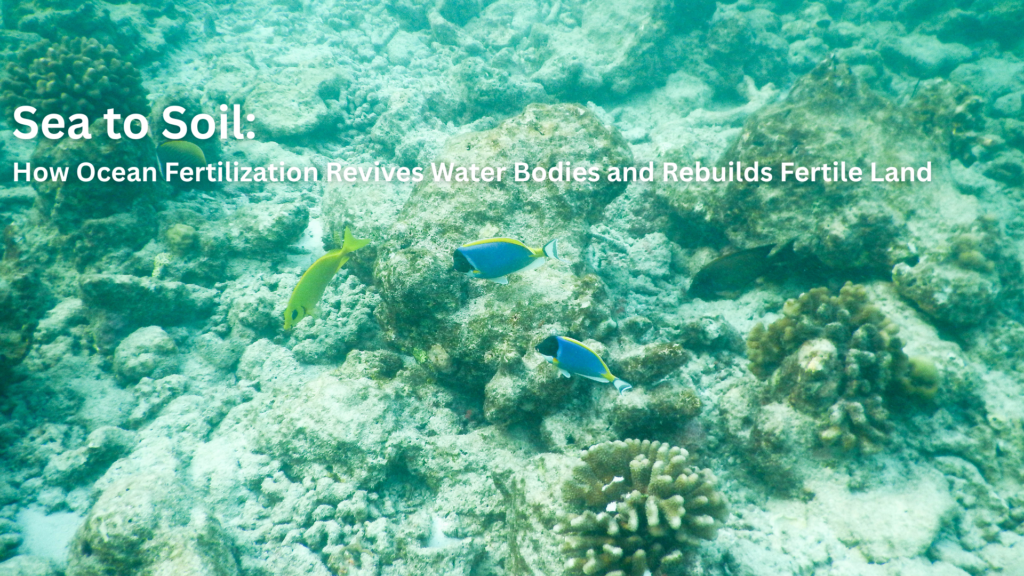
When we think about saving the planet, we often focus on what’s happening on land — planting trees, protecting soil, restoring rivers. But what if one of the most powerful tools for regenerating Earth’s ecosystems lies deep in the ocean? That’s the surprising promise of ocean iron fertilization (OIF) — a method that involves adding trace amounts of iron to certain parts of the ocean to spark blooms of phytoplankton, the microscopic plants that form the foundation of marine life. These tiny organisms may be invisible to the eye, but they’re mighty: they pull carbon out of the atmosphere, feed the ocean food web, and — as it turns out — may also help rejuvenate freshwater systems, forests, and even farmland. Let’s explore how something that starts out in the middle of the ocean could ripple all the way back to our soils, rivers, and skies.

When we think about saving the planet, we often focus on what’s happening on land — planting trees, protecting soil, restoring rivers. But what if one of the most powerful tools for regenerating Earth’s ecosystems lies deep in the ocean? That’s the surprising promise of ocean iron fertilization (OIF) — a method that involves adding […]