 WhatsApp
  +919824528967
  Book A Meeeting

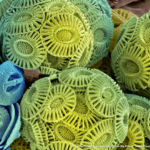
When we think about saving the planet, we often focus on what’s happening on land — planting trees, protecting soil, restoring rivers. But what if one of the most powerful tools for regenerating Earth’s ecosystems lies deep in the ocean?
That’s the surprising promise of ocean iron fertilization (OIF) — a method that involves adding trace amounts of iron to certain parts of the ocean to spark blooms of phytoplankton, the microscopic plants that form the foundation of marine life. These tiny organisms may be invisible to the eye, but they’re mighty: they pull carbon out of the atmosphere, feed the ocean food web, and — as it turns out — may also help rejuvenate freshwater systems, forests, and even farmland.
Let’s explore how something that starts out in the middle of the ocean could ripple all the way back to our soils, rivers, and skies.
Salmon: Nature’s Nutrient Delivery Service
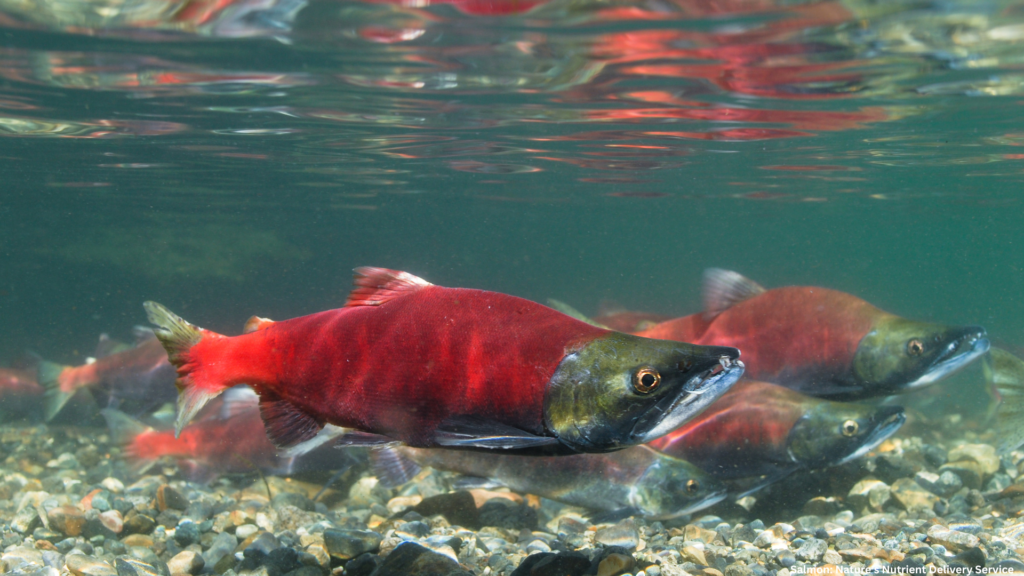
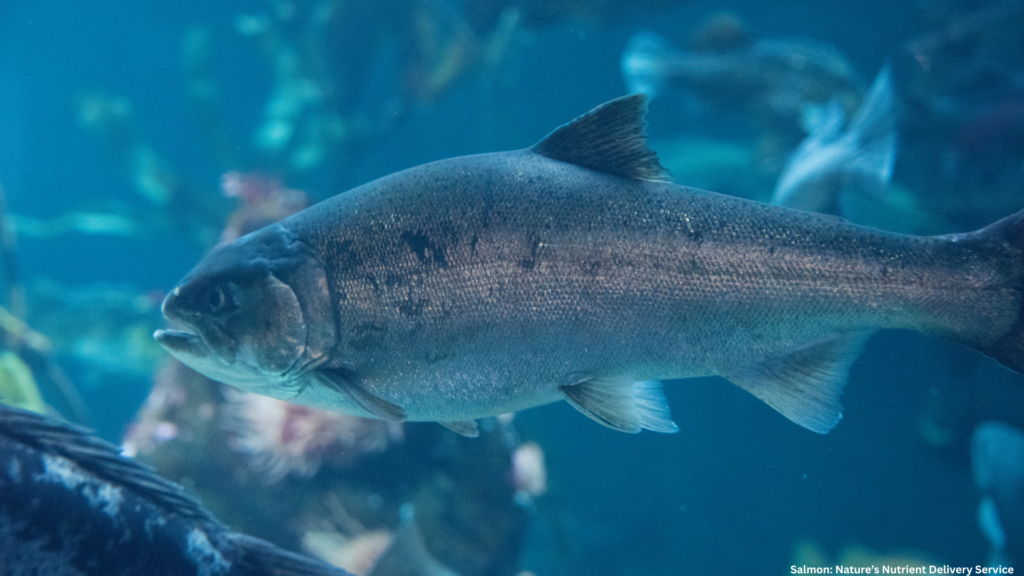
In the wilds of the Pacific Northwest, salmon are more than just fish — they’re lifelines. Born in freshwater streams, these fish spend most of their lives feeding in the open ocean, packing on nutrients from plankton and smaller fish. Then, when they’re ready, they return home to spawn — and die.
This cycle is amazing in itself. But here’s what’s even more fascinating: when salmon die, their bodies become natural fertilizer. Bears, wolves, and eagles drag them into nearby forests, where their remains enrich the soil with ocean-derived nitrogen and minerals. Studies in British Columbia have shown that bears alone can carry thousands of kilograms of salmon into the woods, leaving behind a rich gift for the trees.
Now here’s where OIF comes in: by boosting phytoplankton — the salmon’s food source at sea — ocean fertilization could help increase salmon populations. And more salmon returning to spawn means more nutrients reaching forest soils. In other words, a well-fed ocean means a well-fed forest. It’s an ecological handoff that links the deep blue to the green canopy — and we can help strengthen it.
Seabirds and the Power of Guano
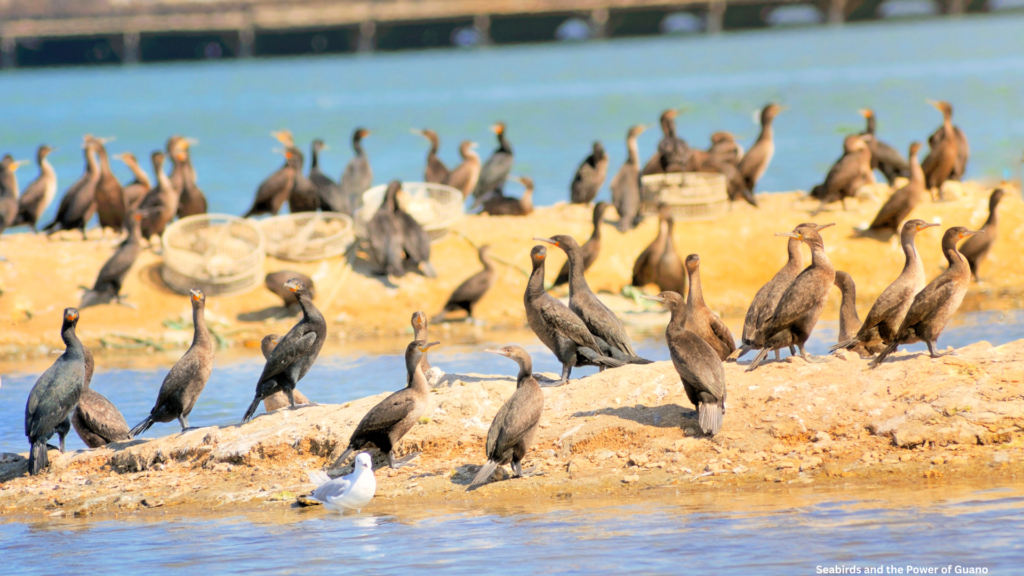
You may not have given much thought to seabird droppings — also known as guano — but for centuries, farmers prized it as one of the most potent natural fertilizers around. Rich in nitrogen, phosphorus, and potassium, guano helped turn barren fields into productive farmland.
Seabirds like gulls, pelicans, and cormorants feast on ocean fish and then nest on islands or cliffs, where their droppings accumulate. During the 1800s, Peru’s guano-rich islands sparked a global trade boom — so much so that entire wars were fought over it.
While we no longer depend on guano to feed the world, seabirds still play an important role in transferring ocean nutrients to land. And once again, OIF can give this process a boost. By increasing fish populations like anchovies and sardines, OIF can support larger seabird colonies. More birds mean more guano — and more natural fertilizer reaching coastal soils and island ecosystems.
Helping the Sky Help the Soil
Ocean fertilization doesn’t just influence fish and birds — it can also affect the weather itself. Here’s how: when plankton grow, some release a gas called dimethyl sulfide (DMS). This gas rises into the atmosphere and helps form clouds. More clouds can mean more rain — especially important in regions facing drought or irregular weather patterns.
By drawing down CO₂ and encouraging cloud formation, OIF could play a role in restabilizing the water cycle. That means more reliable rainfall, cooler temperatures, and reduced stress on lakes, wetlands, and soil moisture. In places where climate change has led to dried-out rivers and parched farmland, restoring balance in the oceans could help bring water back to the land.
It’s a subtle connection — but a powerful one. When we cool the oceans, we give the skies space to breathe. And when the skies return to balance, they bring rain, refill aquifers, and revive the thirsty ground.
Why This Matters Now
We’re living in a time when the Earth’s natural systems feel more disconnected than ever. Forests are burning, rivers are shrinking, soils are being depleted — and yet, the solutions we talk about often focus on isolated fixes.
What ocean fertilization reminds us is that everything is connected. Plankton feed fish. Fish feed forests. Clouds seeded by plankton bring rain to the soil. Carbon drawn down in the ocean gives breathing room to life on land.
This is a chance to embrace a more holistic way of healing the planet — not just by planting trees or restoring lakes in isolation, but by recognizing the loops of life that link sky, sea, and soil.
A Final Thought: It’s All One System
Ocean iron fertilization may start with scattering a little iron dust in the open sea. But its impacts stretch across ecosystems, borders, and generations.
By tending to the ocean, we can rebuild salmon runs, feed birds, restore rain, and fertilize forests. We can regenerate the loops of life that our modern world has interrupted. And perhaps most importantly, we can remind ourselves that climate action isn’t just about carbon — it’s about connection.
Let’s stop thinking in fragments. From sea to soil, the Earth’s systems want to work together. Ocean fertilization might just be the nudge they need.
