 WhatsApp
  +919824528967
  Book A Meeeting
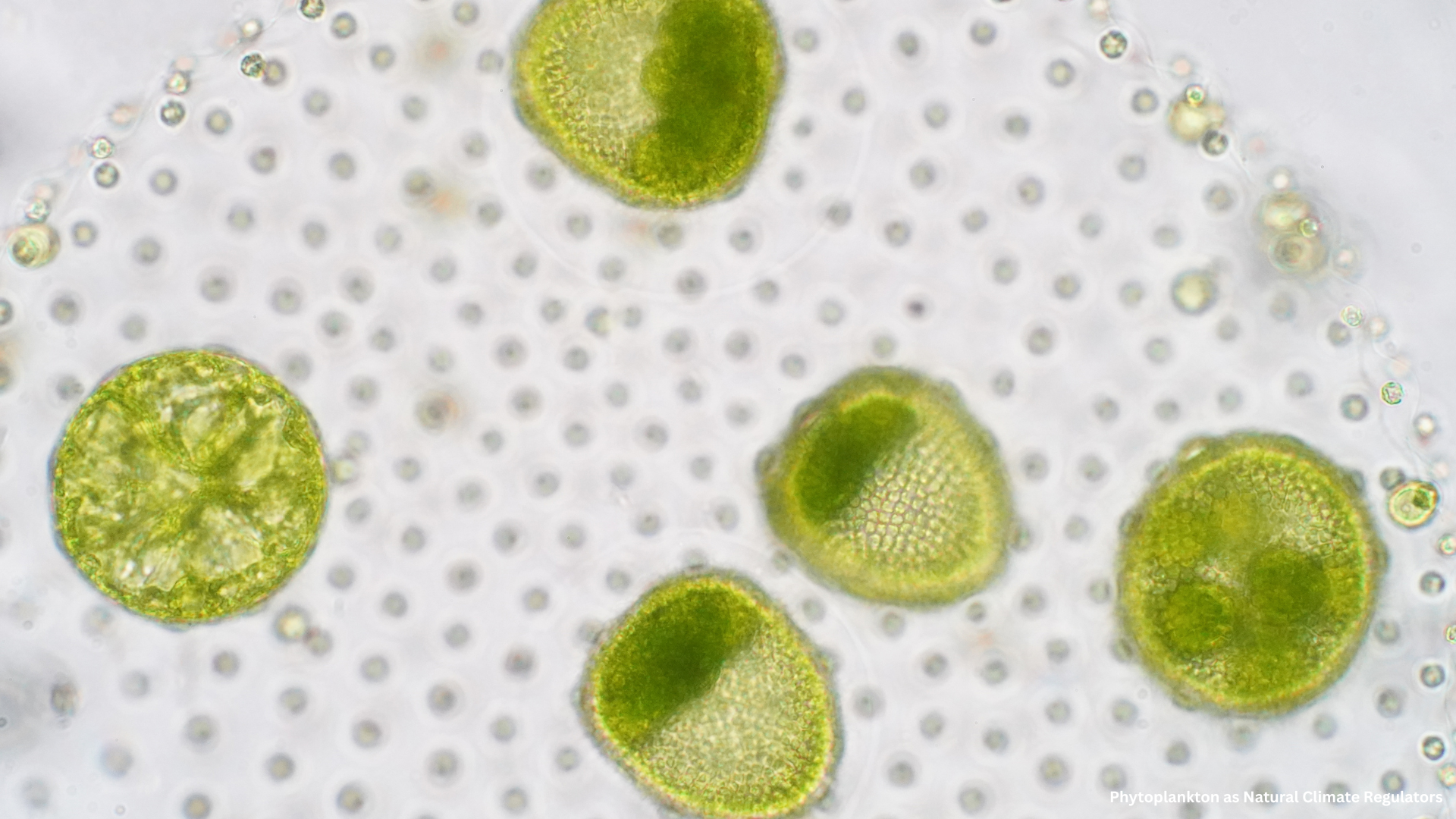



Phytoplankton, the microscopic photosynthetic organisms drifting in the upper sunlit layers of oceans and freshwater, are the foundational producers of the marine food web. However, beyond their ecological significance, they play a pivotal and often underappreciated role in regulating Earth’s climate. Through complex biochemical processes, phytoplankton are instrumental in carbon sequestration, cloud formation, and even regional weather modulation. This article explores the mechanisms by which phytoplankton influence climate systems and their potential as agents of climate restoration.
The Biological Carbon Pump
At the core of phytoplankton’s climate-regulating ability is their role in the biological carbon pump. These organisms absorb atmospheric carbon dioxide (CO₂) during photosynthesis, incorporating it into their biomass. When phytoplankton die or are consumed by zooplankton, the carbon in their bodies can be transported to deeper ocean layers as sinking particulate organic carbon (POC), often in the form of “marine snow.”
Once sequestered below the thermocline, this carbon is effectively removed from the atmosphere for decades to centuries. In some cases, it settles on the ocean floor, entering long-term sedimentary storage. This process is critical in maintaining the balance of CO₂ in the atmosphere and, by extension, moderating global temperatures.
Dimethyl Sulfide and Cloud Formation
In addition to their role in carbon cycling, many phytoplankton species, particularly those like Emiliania huxleyi, produce a compound known as dimethylsulfoniopropionate (DMSP). Through microbial processes, DMSP is converted into dimethyl sulfide (DMS), a volatile sulfur compound that enters the atmosphere.
Once airborne, DMS oxidizes into sulfate aerosols, which serve as cloud condensation nuclei (CCN). These aerosols enhance cloud albedo (reflectivity), leading to increased reflection of solar radiation back into space. The resultant cooling effect contributes to local and possibly global climate moderation. This biogenic cloud seeding mechanism is a natural feedback loop where increased solar irradiance can boost phytoplankton productivity, which in turn increases DMS emissions and cloud reflectivity.
Rainfall Patterns and the Water Cycle
The cloud-modulating effects of DMS may extend to influencing precipitation patterns. By increasing cloud cover and altering cloud microphysics, phytoplankton activity can affect the hydrological cycle. Some climate models suggest that enhanced DMS emissions could lead to greater cloud persistence and redistribution of rainfall, potentially alleviating droughts in adjacent continental regions.
However, the relationship between DMS-induced clouds and rainfall is complex. While some clouds may suppress rainfall due to smaller droplet sizes, others may lead to increased precipitation through prolonged cloud life and moisture retention. Ongoing research seeks to clarify these dynamics and their implications for climate adaptation strategies.
Ocean Fertilization and Climate Mitigation
The concept of ocean iron fertilization (OIF) aims to enhance phytoplankton growth by adding limiting nutrients—primarily iron—to ocean regions known as High-Nutrient, Low-Chlorophyll (HNLC) zones. OIF experiments have demonstrated the feasibility of stimulating phytoplankton blooms, thereby boosting the biological carbon pump.
If managed carefully, OIF could offer a scalable and cost-effective method of carbon dioxide removal (CDR). Furthermore, increased phytoplankton activity through OIF might enhance DMS emissions and cloud cover, potentially offering short-term cooling benefits. Yet, concerns about ecological side effects, verification of carbon sequestration, and governance remain barriers to deployment.
Ecosystem and Economic Co-Benefits
Phytoplankton support marine ecosystems as the base of the food web, and their enhancement could lead to increased fisheries productivity. For example, natural iron fertilization from volcanic ash or Saharan dust has historically coincided with abundant fish harvests.
In economic terms, the ecosystem services provided by phytoplankton—carbon capture, climate regulation, fishery enhancement—represent immense natural capital. Integrating phytoplankton-based solutions into blue carbon markets or ecosystem service frameworks could unlock new financial mechanisms for climate mitigation and adaptation.
Conclusion
Phytoplankton are far more than passive drifters in the ocean; they are dynamic agents of planetary climate regulation. Through carbon sequestration, cloud formation, and interaction with the water cycle, they provide essential services that stabilize Earth’s climate. As the climate crisis intensifies, understanding and potentially enhancing these natural processes offers a promising frontier for sustainable climate intervention. Continued research, careful stewardship, and innovative policy integration will be key to unlocking the full climate potential of these microscopic marine powerhouses.
