 WhatsApp
  +919824528967
  Book A Meeeting
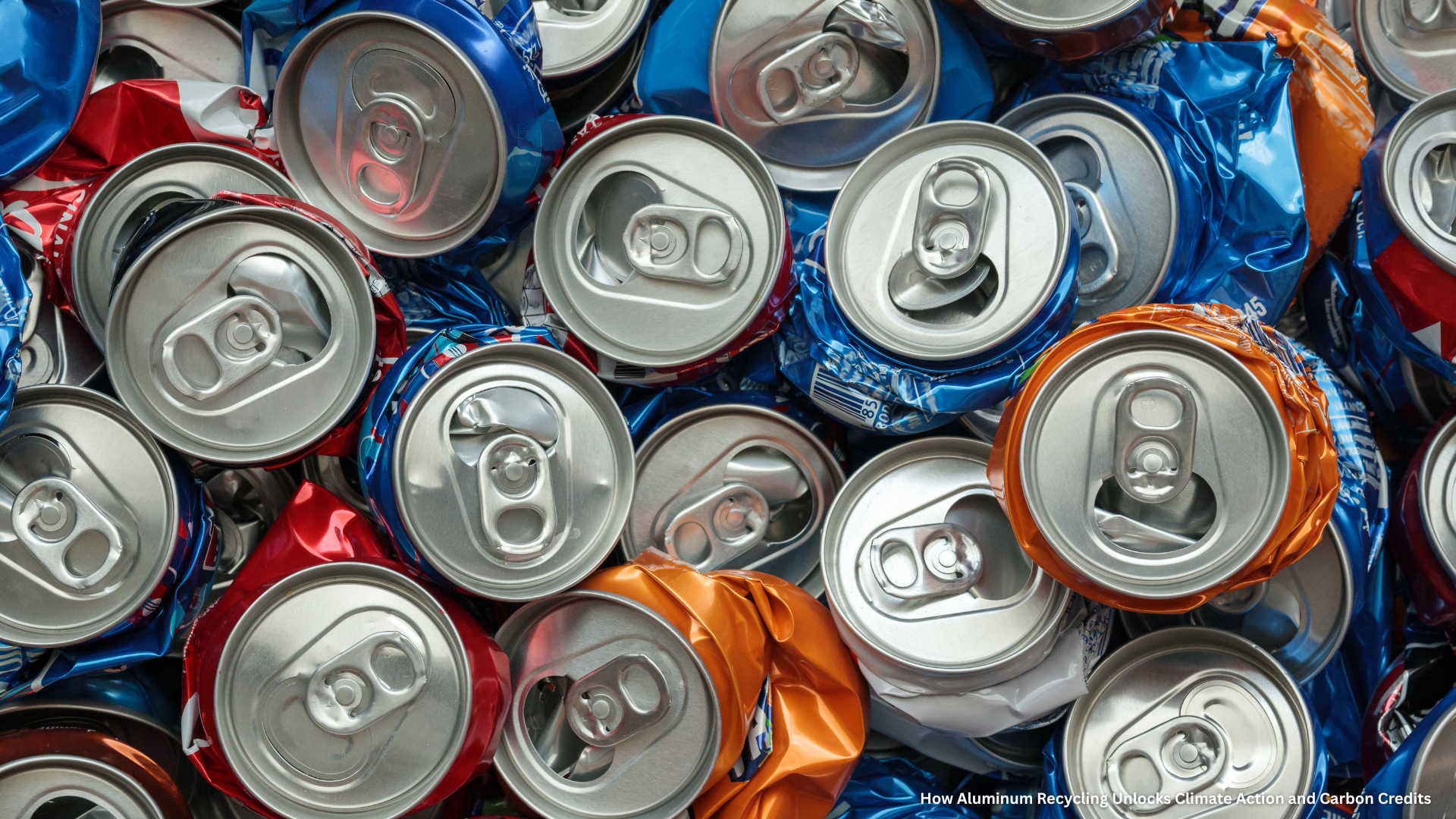




In the race to decarbonize industrial sectors, aluminum stands out as both a challenge and an opportunity. Primary aluminum production is one of the most carbon-intensive industrial processes, emitting roughly 15 tons of CO₂ for every ton of metal produced. But the story changes dramatically when aluminum is recycled. At CredyNova, we believe aluminum recycling isn’t just good sustainability practice—it’s a powerful climate solution with tangible carbon credit opportunities.
Why Aluminum Recycling Matters for the Planet
Aluminum is infinitely recyclable without losing its core properties. Yet mining and refining it from bauxite ore is highly energy- and emissions-intensive. Recycling, in contrast, uses only about 5% of the energy and emits just ~0.5 tCO₂ per ton of metal, achieving 95%+ emission savings.
According to the International Aluminium Institute:
| Metric | Primary Aluminum | Recycled Aluminum | Emissions Reduction |
| Energy Use per Ton | 100% | ~5% | ~95% saved |
| CO₂ Emissions per Ton | ~15.1 tCO₂ | ~0.52 tCO₂ | ~96% avoided |
Every ton of aluminum scrap recovered and recycled helps avoid the emissions equivalent of powering two average homes for a year.
A Cornerstone of the Circular Economy
Aluminum’s longevity and recyclability make it a linchpin in any circular economy model. Approximately 75% of all aluminum ever produced is still in use today. Recycling not only reduces greenhouse gases but also:
- Preserves natural resources by reducing demand for bauxite mining
- Minimizes water use and land disturbance associated with mining and refining
- Limits landfill volumes by recovering post-consumer scrap
Estimates suggest that if the 15 million metric tons of aluminum lost annually as unrecovered scrap were fully recycled, we could prevent up to 250 million tons of CO₂ emissions per year.
Technologies Driving Low-Carbon Aluminum
Modern aluminum recycling is enabled by cutting-edge technologies that improve efficiency, product quality, and emissions profiles:
Molten Metal Logistics
Recyclers like CMR Green and Honda Trading have pioneered systems where molten aluminum is delivered directly from the recycler to casting facilities. This eliminates the need for:
- Re-casting into ingots
- Transport of heavy ingots
- Re-melting at the downstream plant
Together, these steps can reduce energy use by an additional 10–20%.
Sensor-Based Scrap Sorting
Advanced separation technologies are key to maintaining alloy purity:
- Eddy current separators isolate non-ferrous metals
- X-ray transmission (XRT) sorts by density
- Laser-induced breakdown spectroscopy (LIBS) identifies alloy composition
- AI-based optical systems detect surface features and contaminants
These methods enable high-purity outputs that are critical for demanding sectors like aerospace and automotive.
Low-Emission Smelting and Furnaces
Modern furnaces for recycling now use:
- Electric induction heating powered by renewables
- Regenerative burner systems to recover and reuse waste heat
- Inert anodes that eliminate direct CO₂ emissions during electrolysis
Together, these reduce both Scope 1 and Scope 2 emissions.
Dross Recovery and De-Coating
Dross, the by-product of melting aluminum, still contains valuable metal. Through salt flux refining and mechanical separation, much of this can be recovered. De-coating systems remove lacquers, paints, and oils prior to melting, further improving yield and air emissions.
Earning Carbon Credits Through Aluminum Recycling
Aluminum recycling projects can access carbon finance by demonstrating measurable, additional, and verifiable emission reductions compared to baseline scenarios. Recognized carbon standards include:
Gold Standard (GS4GG)
Supports aluminum recycling globally using its new consolidated methodology for recovery and recycling. Projects must:
- Prove displacement of virgin aluminum
- Quantify avoided emissions
- Monitor and report energy use, scrap intake, and outputs
Verra Verified Carbon Standard (VCS)
Uses methodology VMR0007, which is based on CDM AMS-III.AJ with additional conservative discount factors to prevent over-crediting. Projects:
- Must prove additionality
- Use standardized emission factors for virgin vs recycled aluminum
- Submit to third-party validation and verification
Clean Development Mechanism (CDM)
Although now largely phased out, CDM projects used methodology AMS-III.AJ to issue Certified Emission Reductions (CERs). The methodology remains foundational and is referenced by both Gold Standard and Verra.
Typical Calculation Framework:
Emission reductions = (EF_primary – EF_recycled) x Quantity_recycled – Project emissions
Where:
- EF = Emission Factor (e.g., 15.1 tCO₂/t for primary aluminum)
- Project emissions include energy and transport related to recycling
Real-World Impact
AS Metal (Romania)
Registered under Gold Standard, this project processes post-consumer aluminum scrap and displaces virgin aluminum. Key highlights:
- 100,000 tCO₂e in credits issued
- Strong MRV (monitoring, reporting, verification)
- Local economic benefits and partnerships with universities
Jiangxi Jinwang (China)
A Verra VCS project processing ~15,000 t/year of aluminum scrap:
- ~58,871 tCO₂e/year in verified reductions
- Uses conservative substitution factors
- Robust baseline and monitoring methodology
CMR Green (India)
Registered with the UNFCCC, this facility delivers molten aluminum directly to end-users:
- Saves energy on remelting
- Reduces metal loss from oxidation
- Supports circular supply chains in automotive casting
Economics That Make Sense
Capital Expenditure
- Medium-sized plant (~10,000–20,000 tpa): $5M–$25M depending on location and technology
Operational Savings
- 95% lower energy costs compared to primary aluminum
- Lower feedstock cost (scrap cheaper than virgin ingots)
Revenue Streams
- Carbon Credits: $5–15 per tCO₂ (voluntary market), potentially more with co-benefits
- Low-Carbon Premiums: Many buyers offer price premiums for verified low-carbon aluminum
Payback Period
Depending on scale, co-product sales, and credit price, projects may break even within 3–7 years.
Barriers and How to Overcome Them
| Challenge | Solution |
| Contaminated scrap inputs | Advanced sorting and alloy-specific segregation |
| Regulatory complexity | Align with Basel Convention and local import/export laws |
| Additionality concerns | Document baseline conditions and provide third-party data |
| Double counting risk | Secure host country authorization for carbon claims |
| Double-counting risk | Deploy MRV systems from project inception |
Best Practices for Project Developers
- Assess baseline recycling rates to determine additionality.
- Use robust, validated methodologies (e.g., VMR0007, GS4GG).
- Implement data monitoring systems for energy, inputs, and outputs.
- Involve local stakeholders, especially informal waste workers.
- Integrate sustainability metrics, such as job creation, waste diversion, or health and safety.
Final Thoughts
Aluminum recycling is more than a sustainability initiative. It is a climate-smart, economically viable, and technologically advanced solution to one of the world’s most pressing industrial challenges. With robust methodologies, supportive policy shifts, and rising corporate demand for low-carbon materials, now is the time to scale up.
At CredyNova, we help innovators navigate carbon markets, design recycling projects, and unlock financial and environmental returns. Let’s turn scrap into savings—for your business and the planet.
Contact our team to explore how your recycling project can earn carbon credits and lead the circular transition.
