 WhatsApp
  +919824528967
  Book A Meeeting
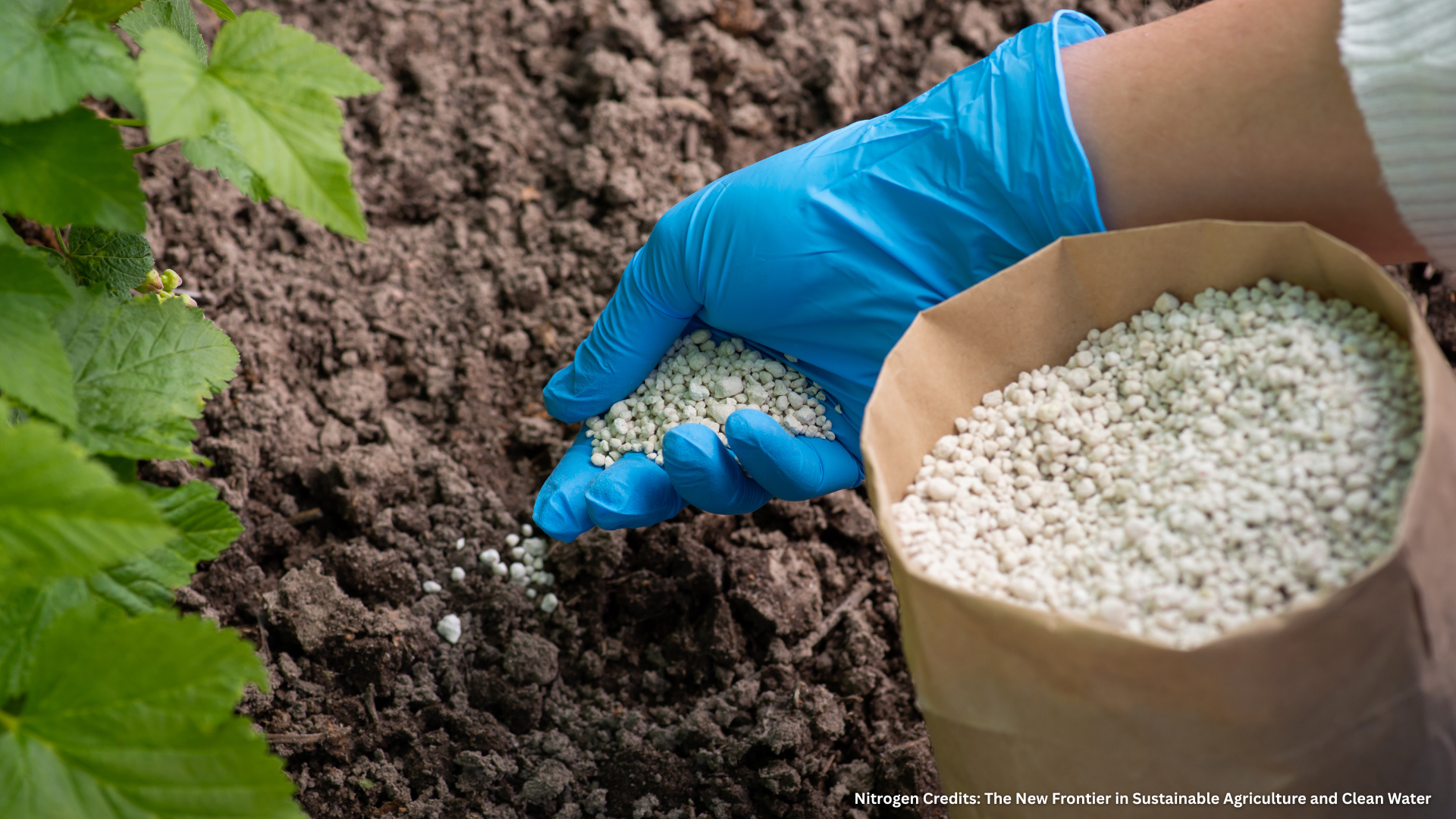



Excess reactive nitrogen—from agriculture farm runoff to wastewater—is a growing crisis. Surplus fertilizer fuels toxic algal blooms, dead zones, soil acidification, and smog, while powerful nitrous oxide (N₂O) emissions (about 300× the warming potential of CO₂) escape from fields. In the EU alone, agricultural nitrogen pollution costs society an estimated €35–230 billion per year, far exceeding farm profits from fertilizer. These problems threaten drinking water supplies, aquatic biodiversity, air quality, and climate goals.
Nitrogen credits offer a market-based fix: they incentivize farmers, industries, and municipalities to cut nitrogen losses by turning pollution reduction into a tradable asset. Each credit represents a verified reduction in nitrogen pollution, expressed either in mass (e.g., pounds or metric tons of nitrogen) or as a CO₂-equivalent offset when nitrous oxide emissions are mitigated. Programs assign a financial value to these reductions, creating new revenue opportunities for project developers and stakeholders while addressing one of the planet’s most persistent environmental challenges.
What Are Nitrogen Credits and How Do They Work?
Nitrogen credits are environmental commodities that represent quantified and verified reductions in reactive nitrogen pollution. These can include:
- Reduced nitrate runoff to water bodies (improving water quality)
- Lowered nitrous oxide (N₂O) emissions to the atmosphere (a potent greenhouse gas)
- Avoidance of ammonia volatilization from fertilizers
Each credit corresponds to a specific amount of nitrogen prevented from entering the environment compared to a defined baseline. These credits are then registered and verified through standards and can be sold to buyers seeking to:
- Comply with nutrient discharge regulations (e.g., wastewater treatment plants)
- Meet internal sustainability goals (e.g., companies aiming to reduce Scope 3 emissions)
- Participate in voluntary carbon or water quality markets
Credit Lifecycle
- Project Design: Define baseline emissions or discharges and project interventions
- Implementation: Carry out nitrogen-reducing practices or technologies
- Monitoring and Reporting: Quantify reductions using approved methods
- Verification: Third-party auditors validate reported outcomes
- Issuance and Sale: Credits are issued by a registry and sold to buyers
Types of Nitrogen Credit Projects
Nitrogen reduction projects can span across various sectors. Common project types include:
1. Agricultural Projects
- Precision fertilization and variable-rate application
- Reduced nitrogen application rates
- Use of nitrification and urease inhibitors
- Cover cropping and legume rotations
- Adoption of slow- or controlled-release fertilizers
- Incorporation of biological nitrogen-fixation technologies
- No-till or reduced-till farming systems
2. Wastewater Treatment Upgrades
- Enhanced denitrification or nutrient removal processes
- Anammox systems and biofilm reactors
- Recovery of nutrients through struvite precipitation or ion exchange
- Constructed wetlands and decentralized treatment systems
3. Industrial Pollution Control
- Wastewater treatment from food, beverage, fertilizer, and mining sectors
- Process optimization to reduce nitrogen-rich effluent
- Nitrogen recovery systems for reuse or conversion to fertilizers
4. Ecosystem Restoration and Nature-Based Solutions
- Riparian buffers and stream restoration
- Wetland creation and enhancement
- Floodplain reconnection
- Afforestation and soil organic matter enhancement
MRV: Measuring, Reporting, and Verification of Nitrogen Credits
MRV is essential to ensure environmental integrity and transparency. A robust MRV framework includes:
- Baseline Determination: Estimate nitrogen losses without intervention using field data, empirical models (e.g., DNDC, DAYCENT), and IPCC emission factors
- Data Collection: Soil and water sampling, nitrogen use records, fertilizer application logs, GIS data, and remote sensing
- Monitoring Frequency: Seasonal or annual depending on project type
- Tools and Platforms: IoT sensors, drone surveillance, satellite imagery, and data analytics platforms
- Verification: Independent auditors conduct on-site inspections and data reviews to validate reported nitrogen reductions
Standards and Methodologies
Several frameworks and protocols support the issuance of nitrogen credits:
- Verra (VCS): Includes methodologies such as VM0042 (Improved Agricultural Land Management), under revision to include nitrogen-specific interventions
- American Carbon Registry (ACR): Offers N₂O-focused offset methodologies for fertilizer optimization in U.S. corn systems
- Gold Standard: Developing protocols focused on N₂O reductions from fertilizer management (e.g., enhanced-efficiency fertilizers, nitrification inhibitors)
- UNFCCC CDM (Clean Development Mechanism): Historically limited support but potential future scope under Article 6 of the Paris Agreement
Additionally, state-run water quality trading programs in the U.S. (e.g., Pennsylvania, Virginia) have approved Best Management Practices (BMPs) for nitrogen credit generation.
Registries
Registries are centralized platforms that track the issuance, ownership, transfer, and retirement of nitrogen credits. Key registries include:
- Verra Registry
- ACR Registry
- Gold Standard Impact Registry
- State-level nutrient registries (e.g., Pennsylvania DEP Nutrient Credit Ledger)
- Emerging blockchain-based platforms for nutrient and carbon traceability
Registries enforce credit transparency, prevent double counting, and ensure market accountability.
Technologies Enabling Nitrogen Reductions
In Agriculture:
- Precision agriculture tools (soil sensors, GPS-guided applicators)
- Digital platforms for nutrient management planning
- Enhanced-efficiency fertilizers (e.g., polymer-coated urea)
- Nitrification and urease inhibitors (e.g., Limus®, DCD, DMPP)
- Biological nitrogen fixation agents (e.g., Pivot Bio’s Proven®)
- Satellite imagery and modeling for N-loss estimation
In Wastewater/Industry:
- Biofilters and constructed wetlands
- Denitrification filters and sequencing batch reactors
- Anammox and advanced oxidation processes
- Nutrient recovery from biosolids
Case Studies and Success Stories
1. Pivot Bio’s N-Ovator Program (USA)
- Paid over $6M to farmers
- Delivered 100,000 nitrogen credits to global corporations
- Achieved 16,500 tons of synthetic fertilizer replacement across ~800,000 acres
2. BASF & Cérésia (France)
- Piloted Limus® and Ampliqan® inhibitors
- Reduced ammonia losses by 50% and nitrate leaching by 47%
- Validated emissions reduction and yield maintenance in commercial trials
3. Wetland Credit Program (Illinois, USA)
- Constructed wetlands on <0.5% of watershed reduced 14% of nitrogen loading
- Delivered water-quality credits to municipal wastewater utilities
- Cost-effective alternative to treatment plant upgrades
4. PA Nutrient Trading Program (USA)
- Farmers earned ~$134,000 over 3 years for no-till practices
- Verified N reductions sold to municipal permit holders
- Demonstrated feasibility of regulatory credit generation in agriculture
Market Participants: Buyers and Sellers
Buyers:
- Municipalities and wastewater treatment plants
- Corporates with Scope 3 emission goals (e.g., Nestlé, Heineken)
- NGOs and conservation funds
- Governments and donor-funded programs
Sellers:
- Farmers and agricultural cooperatives
- Project developers and NGOs
- Industrial facilities and municipalities
Marketplaces and Trading Mechanisms:
- Voluntary marketplaces (e.g., Nori, Indigo Ag)
- Water-quality exchanges (e.g., Virginia Nutrient Exchange)
- Private brokerage agreements
- Blockchain-based environmental asset markets
Challenges and Opportunities
Challenges:
- Uncertainty in nitrogen loss quantification and modeling
- High cost and complexity of MRV in diffuse systems
- Lack of standardized nitrogen accounting frameworks
- Limited awareness among farmers and municipalities
- Fragmented regulatory landscape
Opportunities:
- Growing demand for climate-smart agriculture solutions
- Alignment with water-quality and biodiversity goals
- Integration with carbon and ecosystem service markets
- Co-benefits: soil health, productivity, climate mitigation
- CredyNova’s role as a platform and technical enabler
CredyNova’s Role in the Nitrogen Credit Ecosystem
CredyNova is at the forefront of enabling scalable and verifiable nitrogen credit projects by providing:
- Methodology Development: Custom tools aligned with IPCC and ISO standards
- Project Support: Design, modeling, and MRV toolkits
- Registry Integration: Seamless credit registration and tracking
- Market Access: Matching projects with verified corporate and regulatory buyers
Our mission is to unlock the value of environmental performance for sustainable land, water, and climate solutions.
Conclusion: The Future is Bright for Nitrogen Credits
Nitrogen credits are no longer a concept—they are real, verifiable, and marketable tools that bridge the gap between agriculture, water quality, and climate action. With new methodologies under development, growing corporate interest, and pioneering projects already underway, nitrogen credit markets are poised for rapid growth.
As policymakers and investors recognize the urgency of nitrogen management, platforms like CredyNova will play a pivotal role in mobilizing finance, building trust, and creating tangible impact.
Now is the time to transform nitrogen pollution into environmental and economic value.
