 WhatsApp
  +919824528967
  Book A Meeeting
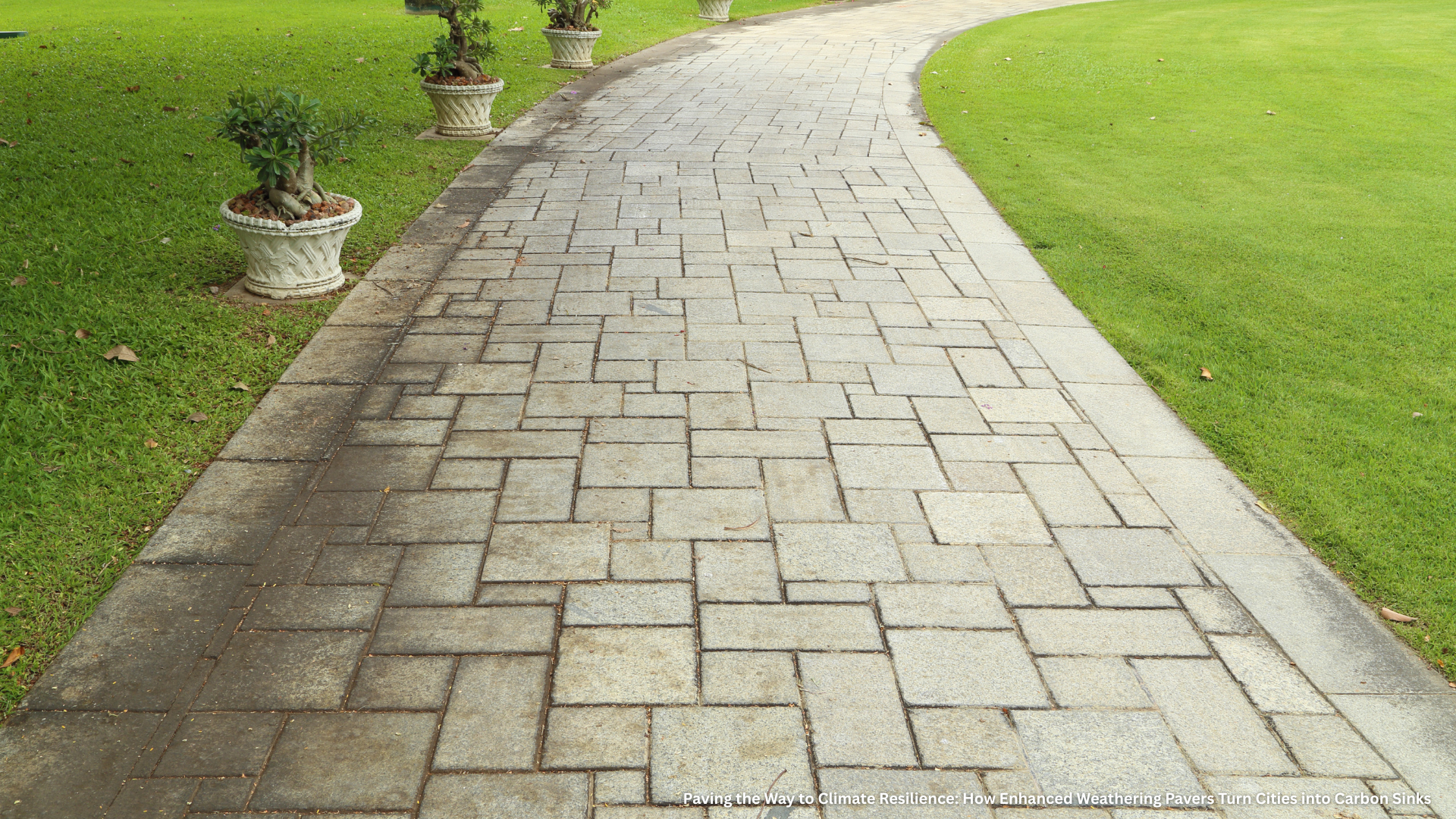


As cities race to reduce emissions and build climate-resilient infrastructure, a quietly revolutionary idea is taking root beneath our feet: using enhanced weathering paver blocks to capture and store atmospheric carbon dioxide. Imagine streets, sidewalks, and public plazas that not only support urban life but actively remove CO₂ from the atmosphere. Thanks to advances in materials science and civil engineering, this vision is now within reach.
What Is Enhanced Weathering?
Enhanced weathering (EW) is a climate solution based on a natural process. Over geological time, silicate rocks like basalt and olivine weather through exposure to rain and CO₂, forming stable carbonates and bicarbonates. By crushing these minerals into fine grains, we can dramatically speed up their natural ability to remove carbon from the air.
When embedded into paver blocks or applied as a surface layer in roads, this material reacts with CO₂ from rainwater and air, permanently storing it in mineral form. In effect, sidewalks become part of the planet’s natural carbon sink.
Turning Pavement into Carbon Removal Infrastructure
Enhanced weathering pavers are built just like conventional concrete or asphalt blocks, with one key difference: they contain reactive minerals that absorb CO₂ over time. These minerals can be mixed into the concrete, applied as surface coatings, or used in permeable paving systems where rainwater can flow through and enhance weathering.
Here’s how it works:
- Mineral Activation: Finely crushed olivine or basalt is integrated into the paver material.
- Atmospheric Contact: As rainwater and air pass over and through the pavers, the minerals react with CO₂.
- Permanent Storage: The CO₂ forms carbonates, safely locked into solid rock for millennia.
No special equipment is needed. These blocks are manufactured, installed, and maintained just like conventional pavers—making this a truly plug-and-play solution for cities.
Real-World Projects Making a Difference
Leek, Netherlands: A pioneering project laid olivine-infused asphalt on city roads. Over 6–8 years, this pilot stretch is expected to remove about 40 tonnes of CO₂—roughly equal to the emissions of 300,000 kilometers of driving. The lighter road surface also improves visibility and may help reduce the urban heat island effect.
Red Sea Project, Saudi Arabia: Partanna, a carbon-negative concrete startup, delivered 11,000 pavers to a flagship sustainable resort. Made from desalination brine and slag, these blocks absorb CO₂ as they cure and age, with an estimated 15.1 tonnes of CO₂ removal credits. Crucially, the technology has been validated under Verra carbon standards.
CarbiCrete, Canada: This innovative company replaces cement with steel slag and cures blocks in CO₂-rich chambers. Their permeable grow-through pavers are used in urban landscaping and stormwater systems. A typical CarbiCrete plant captures 20,000 tonnes of CO₂ annually and eliminates cement emissions altogether.
Stockholm, Sweden: A pilot sidewalk installation using slag-based cement and CO₂-absorbing aggregates resulted in a 4-tonne CO₂ savings. Though costs were initially higher, officials project major savings through lifecycle reductions in emissions and stormwater management.
A Scalable, Cost-Effective Climate Tool
Enhanced weathering pavers are cost-competitive with traditional materials, especially when accounting for long-term savings and carbon offsets. Basalt and olivine are abundant, and waste materials like steel slag are widely available. Cities can tap into carbon markets to sell removal credits or qualify for green infrastructure funding.
Benefits include:
- Lifecycle Savings: Reduced emissions, extended pavement life, and lower stormwater management costs.
- Resilience Co-Benefits: Permeable pavers reduce urban flooding. Light-colored surfaces help cool city streets.
- Minimal Disruption: Integrates seamlessly into existing construction workflows.
- Verified Carbon Removal: With certification pathways emerging, cities and companies can monetize their impact.
Building the Climate-Resilient Cities of Tomorrow
Enhanced weathering pavers exemplify the future of climate-smart infrastructure. Instead of adding complexity, they enhance existing systems. Every square meter laid is a step toward net-zero, a cleaner atmosphere, and more resilient communities.
Cities have an opportunity to transform their streets into distributed carbon-removal networks. Every new sidewalk or plaza can be a passive climate solution.
Credynova: Powering Urban Climate Solutions
At Credynova, we champion frontier technologies that make sustainability a foundation of urban life. Enhanced weathering pavers align perfectly with our vision: durable, climate-positive, and financially viable solutions that scale. Through research, investment, and partnerships, we support cities ready to lead on carbon removal and resilient design.
The ground beneath our feet can do more than support our steps. It can clean our air. Let’s pave the way to a climate-resilient future—together.
